From the book "What do we know about war?"
1. Territorial disputes are far more likely to lead to war than other disputes. This is probably because such disputes are highly visible, don't give much room for policy maneuveuring, and lend themselves to military fights (since armies are designed to capture ground)
2. Alliances have generally led to increased war, but there are fundamentally different kind of alliances. An alliance between Peru and Ecuador to take over Europe doesn't really matter. Similarly, a non-aggression pact between France and Germany because they just settled an old dispute generally does not lead to increased violence. On the other hand, an alliance between two unhappy states, or states that have a big difference in power, lead to war. The first because neither country likes the status quo, and the second because states generally do not ally with other states that have more power or less power than them...a new alliance would imply war soon.
3. Democracies behave differently. They make alliances for non-strategic reasons, ally with other democracies, have longer alliances, and escalate more when facing non-democracies.
4. Military buildup increases the chances of conflict, especially when the international order is in flux and when the defense budget is high.
Sunday, September 28, 2008


This is getting ridiculous
Absolutely ridiculous.
CNN just had breaking news about some key breakthroughs on the bailout...highlights were mostly about executive compensation.
A LOT of anger has been coming out lately about executives getting untold amounts of money. I can't say I blame them: executive compensation is getting wildly out of control, and a lot of it seems based on...nothing at all. They even get massive aid packages when their companies fail and let the CEOs go due to bad results: the so-called "golden parachute" that many worry about.
However...this really is not the time to be addressing those issues. This discussion about the bailout package should largely be focused on the economic ramifications of dishing out $700 billion to the private sector: will the program even work? What happens if it doesn't? How will we finance it? What is being given up to fund it? Who should manage the assets and how should we value them?
Instead of that, we hear loud cries against bailouts, saying let the whole system collapse and force CEOs to live in cardboard boxes forever.
Looks like "proof beyond a reasonable doubt" doesn't apply if you are rich. And rational discussion can't get done if even a spot of cash gets sent to "the rich."
Funny how many people support tax cuts, though...
CNN just had breaking news about some key breakthroughs on the bailout...highlights were mostly about executive compensation.
A LOT of anger has been coming out lately about executives getting untold amounts of money. I can't say I blame them: executive compensation is getting wildly out of control, and a lot of it seems based on...nothing at all. They even get massive aid packages when their companies fail and let the CEOs go due to bad results: the so-called "golden parachute" that many worry about.
However...this really is not the time to be addressing those issues. This discussion about the bailout package should largely be focused on the economic ramifications of dishing out $700 billion to the private sector: will the program even work? What happens if it doesn't? How will we finance it? What is being given up to fund it? Who should manage the assets and how should we value them?
Instead of that, we hear loud cries against bailouts, saying let the whole system collapse and force CEOs to live in cardboard boxes forever.
Looks like "proof beyond a reasonable doubt" doesn't apply if you are rich. And rational discussion can't get done if even a spot of cash gets sent to "the rich."
Funny how many people support tax cuts, though...
Saturday, September 27, 2008
Career Fair
Last Thursday, the University of Illinois at Chicago hosted the Fall Diversity Career Fair at the new Forum building.
It was a pretty nice get-up, all in all. Entrance was speedy, as usual, despite the fact that the actual fair floor was literally wall to wall people (especially around the bigger name companies, like Allstate). However, most all of the representatives there were genuinely nice, despite the heat and the noise. A good experience.
To would-be job-seekers, though, I would offer the following advice:
1. Actually dress up. I saw a number of people (though a small minority) that came in nothing but a t-shirt and jeans. Seriously, folks, that's not the kind of image you want to be sending to potential employers!
2. Follow-up, follow-up, follow-up. If you have a business card, send a thank-you email immediately. Get on your computer and log onto the company website RIGHT NOW. Go down to the career center and sign up for one of their seminars if you haven't already. The biggest problem people have is keeping up the momentmum after they feel pumped up: don't let this happen to you!
3. Calm down, folks. Relax, have a little bit of fun. It's a job fair, but you're also in college, and everyone (including employers) likes someone sociable. If you're standing in a long line for an employer, talk to the people around you. Crack a few jokes.
Hope that helps.
P.S. For younger readers: Start the career process now. Go find an internship, talk to companies, etc etc. It helps a lot later on.
It was a pretty nice get-up, all in all. Entrance was speedy, as usual, despite the fact that the actual fair floor was literally wall to wall people (especially around the bigger name companies, like Allstate). However, most all of the representatives there were genuinely nice, despite the heat and the noise. A good experience.
To would-be job-seekers, though, I would offer the following advice:
1. Actually dress up. I saw a number of people (though a small minority) that came in nothing but a t-shirt and jeans. Seriously, folks, that's not the kind of image you want to be sending to potential employers!
2. Follow-up, follow-up, follow-up. If you have a business card, send a thank-you email immediately. Get on your computer and log onto the company website RIGHT NOW. Go down to the career center and sign up for one of their seminars if you haven't already. The biggest problem people have is keeping up the momentmum after they feel pumped up: don't let this happen to you!
3. Calm down, folks. Relax, have a little bit of fun. It's a job fair, but you're also in college, and everyone (including employers) likes someone sociable. If you're standing in a long line for an employer, talk to the people around you. Crack a few jokes.
Hope that helps.
P.S. For younger readers: Start the career process now. Go find an internship, talk to companies, etc etc. It helps a lot later on.
Tuesday, September 23, 2008
Government vs. Private Culpability
A lot of crap has been flung around over the past couple months among people trying to assign blame to different actors in this crisis. Is it the loan officers? The homebuyers? Wall Street? Fannie Mae? There's a bit of blame for everyone to share here.
One of the biggies, though, is a large group of people blaming government in general and the Federal Reserve in specific for this crisis. According to them, if they had not acted so capriciously and created such easy credit, this crisis never would have been able to get off the ground. Hence, according to these people, the Federal Reserve should be eliminated...or at least have its power restricted.
So, is government culpable for this disaster?
The argument rests upon the creation of easy credit. By decreasing interest rates too much, companies and consumers start loading themselves up with debt. Interest payments are low, expected growth is high, so why the heck not? However, the "easy credit" also implies "irrational exuberance." The government is creating artificially strong business conditions, above where we could produce with a full employment economy. So, once the economy starts cooling down, a lot of the debt that looked good at the time...really isn't. Mr. Time Machine producer who took on a $1 million home equity loan is screwed because he has no market and all these interest payments to service.
In this example, government is the primary villain. By lowering interest rates and making the economy seem better than it actually was, they encourage the entire private sector to over-leverage, thus setting the economy up for a painful readjustment.
But, wait! There's a scenario where private actors make the mistake, and government acts perfectly rational. In this example, the private sector makes the mistake because they take the credit and do stupid things with it.
Consider the example where the government perfectly manages interest rates. The Federal Reserve has just the right Fed Funds rate and just the right amount of T-Bonds on the market, and the economy is producing exactly at full employment. All is well...right?
Well, Mr. Time Machine Producer still ends up getting a $1 million home equity loan, because some bank thought it was a good idea. That still doesn't change the fact that, objectively, his business plan doesn't work because his product cannot possibly exist. So he's going to default.
The point is that markets can still misjudge business ventures and the credit quality of borrowers, even if the economy is functioning perfectly smoothly and government has set interest rates perfectly. No matter if credit was tight, loose, or just right, the private sector would STILL be misallocating resources. And that means painful readjustment.
The questions here are two fold. The first is what size the bubble can possibly be. Many would assume that the bubble can't get very big. This, however, depends entirely on the private sector and its own interpretations. If it reads the market VERY wrong, it's going to misallocate resources VERY wrong.
The second question is one of adjustment. If markets have allocated resources badly, shouldn't they reallocate them very quickly, thus averting recession? That's a question of sticky prices, particularly ones involving the labor market, and therefore tough to answer.
But if the private sector reads the market wrong and the market is slow to adjust, we can be stuck in a long recession, even if the government did everything right.
What about the current crisis?
Well, in my opinion, we probably were overproducing. Unemployment was below 5% and inflation was higher than normal. That suggests an expansionary economy (IE, overproducing), meaning too easy credit, meaning the potential for an overall bubble.
But we've had expansionary economies before. This crisis, though, is the worst since the Great Depression. What gives?
It should be obvious: private failure. The failures have largely concentrated in the mortgage market, especially in the subprime market, which is in turn affecting credit. That means sectors of the economy related to finance and home building are hurting, but the rest of the economy is still chugging along pretty well. That suggest MASSIVE misallocation of resources by severely underpricing risk: a private sector failing by definition.
One of the biggies, though, is a large group of people blaming government in general and the Federal Reserve in specific for this crisis. According to them, if they had not acted so capriciously and created such easy credit, this crisis never would have been able to get off the ground. Hence, according to these people, the Federal Reserve should be eliminated...or at least have its power restricted.
So, is government culpable for this disaster?
The argument rests upon the creation of easy credit. By decreasing interest rates too much, companies and consumers start loading themselves up with debt. Interest payments are low, expected growth is high, so why the heck not? However, the "easy credit" also implies "irrational exuberance." The government is creating artificially strong business conditions, above where we could produce with a full employment economy. So, once the economy starts cooling down, a lot of the debt that looked good at the time...really isn't. Mr. Time Machine producer who took on a $1 million home equity loan is screwed because he has no market and all these interest payments to service.
In this example, government is the primary villain. By lowering interest rates and making the economy seem better than it actually was, they encourage the entire private sector to over-leverage, thus setting the economy up for a painful readjustment.
But, wait! There's a scenario where private actors make the mistake, and government acts perfectly rational. In this example, the private sector makes the mistake because they take the credit and do stupid things with it.
Consider the example where the government perfectly manages interest rates. The Federal Reserve has just the right Fed Funds rate and just the right amount of T-Bonds on the market, and the economy is producing exactly at full employment. All is well...right?
Well, Mr. Time Machine Producer still ends up getting a $1 million home equity loan, because some bank thought it was a good idea. That still doesn't change the fact that, objectively, his business plan doesn't work because his product cannot possibly exist. So he's going to default.
The point is that markets can still misjudge business ventures and the credit quality of borrowers, even if the economy is functioning perfectly smoothly and government has set interest rates perfectly. No matter if credit was tight, loose, or just right, the private sector would STILL be misallocating resources. And that means painful readjustment.
The questions here are two fold. The first is what size the bubble can possibly be. Many would assume that the bubble can't get very big. This, however, depends entirely on the private sector and its own interpretations. If it reads the market VERY wrong, it's going to misallocate resources VERY wrong.
The second question is one of adjustment. If markets have allocated resources badly, shouldn't they reallocate them very quickly, thus averting recession? That's a question of sticky prices, particularly ones involving the labor market, and therefore tough to answer.
But if the private sector reads the market wrong and the market is slow to adjust, we can be stuck in a long recession, even if the government did everything right.
What about the current crisis?
Well, in my opinion, we probably were overproducing. Unemployment was below 5% and inflation was higher than normal. That suggests an expansionary economy (IE, overproducing), meaning too easy credit, meaning the potential for an overall bubble.
But we've had expansionary economies before. This crisis, though, is the worst since the Great Depression. What gives?
It should be obvious: private failure. The failures have largely concentrated in the mortgage market, especially in the subprime market, which is in turn affecting credit. That means sectors of the economy related to finance and home building are hurting, but the rest of the economy is still chugging along pretty well. That suggest MASSIVE misallocation of resources by severely underpricing risk: a private sector failing by definition.
Monday, September 22, 2008
Less Focus on SATs?
That's what one commission is suggesting
In my experience, standardized, heavily regulated tests are the only reliable measures to go by. Cheating and work-sharing are rampant, and grade inflation is practically an institution in the American education system at all levels.
If I were an admissions officer, I would consider your 4.0 GPA to be hogwash if you can't get higher than a 26 on the ACT
In my experience, standardized, heavily regulated tests are the only reliable measures to go by. Cheating and work-sharing are rampant, and grade inflation is practically an institution in the American education system at all levels.
If I were an admissions officer, I would consider your 4.0 GPA to be hogwash if you can't get higher than a 26 on the ACT
Friday, September 19, 2008
Central Bank Independence
Some people seem to think that Bernanke and his band of Merry Economists have overstepped their bounds in their bridge loan to AIG.
Well, they certainly might have...but one wonders why Congressmen whine about the lack of oversight of the Fed when they themselves aren't subject to too much "oversight." I mean, they get a heavy hand in drawing their own districts, right?
Anyways, people seem to increasingly demand the reigning of the Federal Reserve Bank. Problem being that this isn't entirely logical. While the Fed has expanded its powers somewhat, central bank independence is an important pillar of any modern economy. It ensures that the financial system isn't subject to the whims of politics, and instead is a rational process based on the needs of the nation.
It is also important to ensure that policy is prompt. Since the Federal Reserve is subject to less "oversight" it can respond to crises faster. While cutting interest rates in order to stimulate demand is still slow, and only a bit faster than government spending by a bit, the Fed has demonstrated remarakble speed and innovation in moving to avert disaster. For instance, quickly extending a bridge loan to AIG, opening the discount window to Investment Banks, etc etc.
The alternative is to rely on government. Government, at the best of times, is relatively slow-moving, and when it is fast moving it is generally in response to national security issues (like the PATRIOT Act). At the worst of times, IE, right before an election, IE, right now, it is ponderous and incapable of the nimble movement required to navigage modern finance.
Hence, central bank independence=good
Well, they certainly might have...but one wonders why Congressmen whine about the lack of oversight of the Fed when they themselves aren't subject to too much "oversight." I mean, they get a heavy hand in drawing their own districts, right?
Anyways, people seem to increasingly demand the reigning of the Federal Reserve Bank. Problem being that this isn't entirely logical. While the Fed has expanded its powers somewhat, central bank independence is an important pillar of any modern economy. It ensures that the financial system isn't subject to the whims of politics, and instead is a rational process based on the needs of the nation.
It is also important to ensure that policy is prompt. Since the Federal Reserve is subject to less "oversight" it can respond to crises faster. While cutting interest rates in order to stimulate demand is still slow, and only a bit faster than government spending by a bit, the Fed has demonstrated remarakble speed and innovation in moving to avert disaster. For instance, quickly extending a bridge loan to AIG, opening the discount window to Investment Banks, etc etc.
The alternative is to rely on government. Government, at the best of times, is relatively slow-moving, and when it is fast moving it is generally in response to national security issues (like the PATRIOT Act). At the worst of times, IE, right before an election, IE, right now, it is ponderous and incapable of the nimble movement required to navigage modern finance.
Hence, central bank independence=good
Updates
I am now an Econ-Finance Major. The double major petition was accepted by my university. Hurrah for me.
In related news, campus recruiting kicks off this week as well. Hopefully this double major gets me something better than Burger King!
In related news, campus recruiting kicks off this week as well. Hopefully this double major gets me something better than Burger King!
Wednesday, September 17, 2008
Thoughts on Finance Classes
What is most striking to me about the majority of my finance classes is that theory is not really emphasized, while formulas are of the utmost importance.
I don't want to knock math, per se. However, a lot of what we learn ends up feeling a bit disjointed. Attend a class day after day, where one formula gets listed after another, and it's very easy to lose sight of the bigger picture and get lost in variables.
The formulas largely consist of valuations. Bond valuations, stock valuations, etc. They are immensely important to understand the cost of the capital structure, which is in turn important to understanding how the firm makes expansion decisions.
HOWEVER, our finance classes generally fail to highlight the bigger picture. They also generally fail to move a quick pace, meaning that we don't look at weighted average capital costs until late in the semester, when bad grades and the daily grind have generally sapped all interest. This is exacerbated when we don't look at the psychology of firm decision making and look exclusively at finances.
An improvement I would make? What variables would change the factors involved in the equation? What would change the discount rate, the capitalization rate, the stock growth rate, etc etc.
In my opinion, it would go a long way to making the course seem more "real" and generating interest in introductory finance courses.
I don't want to knock math, per se. However, a lot of what we learn ends up feeling a bit disjointed. Attend a class day after day, where one formula gets listed after another, and it's very easy to lose sight of the bigger picture and get lost in variables.
The formulas largely consist of valuations. Bond valuations, stock valuations, etc. They are immensely important to understand the cost of the capital structure, which is in turn important to understanding how the firm makes expansion decisions.
HOWEVER, our finance classes generally fail to highlight the bigger picture. They also generally fail to move a quick pace, meaning that we don't look at weighted average capital costs until late in the semester, when bad grades and the daily grind have generally sapped all interest. This is exacerbated when we don't look at the psychology of firm decision making and look exclusively at finances.
An improvement I would make? What variables would change the factors involved in the equation? What would change the discount rate, the capitalization rate, the stock growth rate, etc etc.
In my opinion, it would go a long way to making the course seem more "real" and generating interest in introductory finance courses.
GSEs and failures
One the big arguments I see coming out against the Fannie Mae bailout among the more "fringe" group of people (IE, the libertarians) is that the Fannie Mae bailout largely wouldn't affect normal people. Since it wouldn't affect normal people, we shouldn't even worry about Fannie...especially because bailing out Fannie requires taxing the normal people!
Leaving aside how the tax burden actually falls on the population by income bracket, let's look at how Fannie interacts with the "real economy."
Fannie's primary purpose is purcahse mortgages from banks, pacakge them into mortgage-backed securities, and sell them to big-time investors. The function is pretty important in the modern economy. Big investors being able to buy simple securities instead of a hodgepodge of loans means capital infusions into residential real estate, meaning basic people can afford to buy loans...especially in an era when Americans themselves don't save much money anymore.
So, eliminating Fannie=making a lot tougher for normal people to get loans, just based on sheer capital available.
But what about liquidity? Fannie provides liquidity to local banks. Rather than having 30 year assets on their balance sheets, banks can instead have money to make more loans, either to other home buyers or to local businesses. This means a greater amount of money being invested back into the community. That means more local barber shops, more local restaraunts, and more local 7-11s. And it's being enabled, in part, by Fannie Mae.
Those are two very real effects that Fannie Mae has on the "real economy."
Hence, yes, Fannie Mae matters to everyone.
But what about the cost?
But who's actually paying, and who's actually benefiting?
For one, common stockholders aren't, and have been entirely wiped out. The people benefiting are China, big investors, and other big banks that bought preferred stock and mortgage-backed securities. Also benefiting is everyone who is buying a home, or possibly thinking of buying a home, or even renters (since more homeowners should mean less competition for rent). IE, everyone kind of benefits. This might be a bias against wealth, since the least wealthy are the ones most likely to be unable to afford higher interest rates. The least wealthy also are hurt the most when the economy slows down.
Who actually pays the tax burden?
Welly, by and large, two thirds is derived from corporations and income taxes. Taxes on corporations largely hurt corporations and those that own stock/bonds most directly. So that's a bias against wealth, on average
Let's look at income taxes.
Look at Page 22
As we can see, the wealthiest, obviously, shoulder most of the tax burden. The lowest 20% pay almost nothing, and the next 40% pay less than $10,000 annually. And that's just in taxes. Using slightly rounded numbers, the bottom 60% shoulder 28.8% of the tax burden, or $58 billion in this plan. Assuming 100 million households, that's a bit shy of $1 grand per household.
I think a one time payment of $1,000 is well worth lower interest rates. ;)
Leaving aside how the tax burden actually falls on the population by income bracket, let's look at how Fannie interacts with the "real economy."
Fannie's primary purpose is purcahse mortgages from banks, pacakge them into mortgage-backed securities, and sell them to big-time investors. The function is pretty important in the modern economy. Big investors being able to buy simple securities instead of a hodgepodge of loans means capital infusions into residential real estate, meaning basic people can afford to buy loans...especially in an era when Americans themselves don't save much money anymore.
So, eliminating Fannie=making a lot tougher for normal people to get loans, just based on sheer capital available.
But what about liquidity? Fannie provides liquidity to local banks. Rather than having 30 year assets on their balance sheets, banks can instead have money to make more loans, either to other home buyers or to local businesses. This means a greater amount of money being invested back into the community. That means more local barber shops, more local restaraunts, and more local 7-11s. And it's being enabled, in part, by Fannie Mae.
Those are two very real effects that Fannie Mae has on the "real economy."
Hence, yes, Fannie Mae matters to everyone.
But what about the cost?
But who's actually paying, and who's actually benefiting?
For one, common stockholders aren't, and have been entirely wiped out. The people benefiting are China, big investors, and other big banks that bought preferred stock and mortgage-backed securities. Also benefiting is everyone who is buying a home, or possibly thinking of buying a home, or even renters (since more homeowners should mean less competition for rent). IE, everyone kind of benefits. This might be a bias against wealth, since the least wealthy are the ones most likely to be unable to afford higher interest rates. The least wealthy also are hurt the most when the economy slows down.
Who actually pays the tax burden?
Welly, by and large, two thirds is derived from corporations and income taxes. Taxes on corporations largely hurt corporations and those that own stock/bonds most directly. So that's a bias against wealth, on average
Let's look at income taxes.
Look at Page 22
As we can see, the wealthiest, obviously, shoulder most of the tax burden. The lowest 20% pay almost nothing, and the next 40% pay less than $10,000 annually. And that's just in taxes. Using slightly rounded numbers, the bottom 60% shoulder 28.8% of the tax burden, or $58 billion in this plan. Assuming 100 million households, that's a bit shy of $1 grand per household.
I think a one time payment of $1,000 is well worth lower interest rates. ;)
Wednesday, September 10, 2008
My own policy positions
In order of importance:
-Health care reform, based on market principles and changing incentives to reduce the amount of unnecessary health care Americans use. Means limiting doctors to fee-for-service, tax credit for health care, and taxation of employee health benefits.
-Education reform, based on stronger federalism principles. National standards on a national test, an individual tax deduction/voucher that can be used at a licensed school system of the parent's choice, and no federal funding for states that don't sign on to the program
-A harder line stance on Iran that includes the application of hard military power
-A sensible withdrawal of the majority of combat troops from Iraq, with the permanent presence in the nation being minimal
-An extension and regularization of the tax credits for solar and wind energy, plus a renewed effort to completely revamp the nation's power grid
-A hard push to add Ukraine and Georgia to NATO
-A reconciliation with Syria
-A broader and more defined economic policy with China, to include obvious rules for improvements with clear punishments defined, in addition to assistance to help China develop its local administration so it can more effectively police its rogue local governments
-A carbon tax on all power and commercial polluters, coupled with increased CAFE standards (over the increase that is already planned)
-A simplified FAFSA form, and simplified financial aid system at the college level to a single form of loan capped at $10,000 annum, indexed at inflation. Simultaneously, the addition of two years of general education to the normal "high school" system.
-GAAP only. No friggin' International accounting standards, regardless of what the SEC suggests
-A raising of income taxes...50% increase at the upper tax bracket, 15% increase for the lower tax brackets. Implementation of a sales tax at the 10% level nationwide. Similarly, the AMT will be abolished.
-No more public housing
-Adjustment of the tax code to eliminate the mortgage tax deduction, instead only allowing only property taxes to be deducted at a to-be-determined percentage rate (not sure if the government already allows deduction of property taxes)
Missing from the list that may be important:
-Increased/decreased military spending
-Social Security Reform
More in-depth thought later, but for a brief moment, let me explain the rationale:
The idea of this reform system to simultaneously address the long-run issues of a globally competitive environment, sustainable public finances, and preventing the erosion of American health.
Hence, the concentration, by and large, is on education and health care reform, both of which are eating away at the incomes of American families. In addition, the tax burden would likely increase significantly under this particular plan (basically everything raises taxes to some extent), but the tax burden is allocated in such a way that it should address other issues too: issues like low savings rates, overinvestment in real estate, externalities of pollution, and malinvestment in the health care sector.
I think it's a bearable plan. ;)
-Health care reform, based on market principles and changing incentives to reduce the amount of unnecessary health care Americans use. Means limiting doctors to fee-for-service, tax credit for health care, and taxation of employee health benefits.
-Education reform, based on stronger federalism principles. National standards on a national test, an individual tax deduction/voucher that can be used at a licensed school system of the parent's choice, and no federal funding for states that don't sign on to the program
-A harder line stance on Iran that includes the application of hard military power
-A sensible withdrawal of the majority of combat troops from Iraq, with the permanent presence in the nation being minimal
-An extension and regularization of the tax credits for solar and wind energy, plus a renewed effort to completely revamp the nation's power grid
-A hard push to add Ukraine and Georgia to NATO
-A reconciliation with Syria
-A broader and more defined economic policy with China, to include obvious rules for improvements with clear punishments defined, in addition to assistance to help China develop its local administration so it can more effectively police its rogue local governments
-A carbon tax on all power and commercial polluters, coupled with increased CAFE standards (over the increase that is already planned)
-A simplified FAFSA form, and simplified financial aid system at the college level to a single form of loan capped at $10,000 annum, indexed at inflation. Simultaneously, the addition of two years of general education to the normal "high school" system.
-GAAP only. No friggin' International accounting standards, regardless of what the SEC suggests
-A raising of income taxes...50% increase at the upper tax bracket, 15% increase for the lower tax brackets. Implementation of a sales tax at the 10% level nationwide. Similarly, the AMT will be abolished.
-No more public housing
-Adjustment of the tax code to eliminate the mortgage tax deduction, instead only allowing only property taxes to be deducted at a to-be-determined percentage rate (not sure if the government already allows deduction of property taxes)
Missing from the list that may be important:
-Increased/decreased military spending
-Social Security Reform
More in-depth thought later, but for a brief moment, let me explain the rationale:
The idea of this reform system to simultaneously address the long-run issues of a globally competitive environment, sustainable public finances, and preventing the erosion of American health.
Hence, the concentration, by and large, is on education and health care reform, both of which are eating away at the incomes of American families. In addition, the tax burden would likely increase significantly under this particular plan (basically everything raises taxes to some extent), but the tax burden is allocated in such a way that it should address other issues too: issues like low savings rates, overinvestment in real estate, externalities of pollution, and malinvestment in the health care sector.
I think it's a bearable plan. ;)
Sunday, August 31, 2008
Experience: Palin and Obama
Before you get riled up, this isn't about whether either candidate is "experienced enough" to sit as President of the United States. That's a long argument that I personally don't want to get into on this blog at the moment. Suffice to say that I do in fact believe that Obama does not yet have the experience necessary to be the leader of the free world, and neither does Palin.
What I am concerned about, though, are Republicans and other McCain-supporters suggesting that Palin's "executive experience" should count for more than Obama's time in Congress. The idea is that executive decision-making is ultimately completely different from legislative decision making, and therefore Palin's experience is more relevant than Obama's.
But is this neccessarily the case?
Don't get me wrong: I would prefer a President to have experience as an executive. That's part of the reason why I supported Mitt Romney in the Republican primaries (though Republicans seemed to prefer McCain instead for some reason!)
Sarah Palin's executive experience, though, is very limited. Her only relevant experience is the governorship of Alaska, but how relevant is that to the United States as a whole?
Let's consider the economy:
Now, let's stop right there. 80% of revenues derived from oil? Alaska's economy more closely resembles a Middle Eastern nation than the United States of America. The lack of diversification makes me wonder how much experience Palin actually has in resolving the various disputes and economic difficulties that the President is going to face.
So, on a major issue (economics) her experience might not be all that relevant.
And what about her foreign policy experience?
Well...uhh...we have no idea if she even has any.
Now contrast this with Barack Obama. While true that he hasn't been directly responsible for the well-being of the entire nation, he has been working in Washington, meaning he has spent the last four years looking at the problems America as a whole is facing directly in the face. So, in fact, he does have some experience with national issues.
Also difficult to gauge is how much wheeling-and-dealing he is doing behind the scenes. Politics is a give-and-take game, relying on compromise, motivating others, and even threatening dissident politicians. In that sense, he also has some experience in negotiating a bureaucracy.
That's two bits of experience that do...sort of qualify Obama to be President. Governor Palin, on the other hand, only has experience with a specialized economy on the fringes of the nation, with no experience in foreign affairs at all.
It's pretty clear who's the winner there, "executive experience" or not.
What I am concerned about, though, are Republicans and other McCain-supporters suggesting that Palin's "executive experience" should count for more than Obama's time in Congress. The idea is that executive decision-making is ultimately completely different from legislative decision making, and therefore Palin's experience is more relevant than Obama's.
But is this neccessarily the case?
Don't get me wrong: I would prefer a President to have experience as an executive. That's part of the reason why I supported Mitt Romney in the Republican primaries (though Republicans seemed to prefer McCain instead for some reason!)
Sarah Palin's executive experience, though, is very limited. Her only relevant experience is the governorship of Alaska, but how relevant is that to the United States as a whole?
Let's consider the economy:
The oil and gas industry dominates the Alaskan economy, with more than 80% of the state's revenues derived from petroleum extraction.
Now, let's stop right there. 80% of revenues derived from oil? Alaska's economy more closely resembles a Middle Eastern nation than the United States of America. The lack of diversification makes me wonder how much experience Palin actually has in resolving the various disputes and economic difficulties that the President is going to face.
So, on a major issue (economics) her experience might not be all that relevant.
And what about her foreign policy experience?
Well...uhh...we have no idea if she even has any.
Now contrast this with Barack Obama. While true that he hasn't been directly responsible for the well-being of the entire nation, he has been working in Washington, meaning he has spent the last four years looking at the problems America as a whole is facing directly in the face. So, in fact, he does have some experience with national issues.
Also difficult to gauge is how much wheeling-and-dealing he is doing behind the scenes. Politics is a give-and-take game, relying on compromise, motivating others, and even threatening dissident politicians. In that sense, he also has some experience in negotiating a bureaucracy.
That's two bits of experience that do...sort of qualify Obama to be President. Governor Palin, on the other hand, only has experience with a specialized economy on the fringes of the nation, with no experience in foreign affairs at all.
It's pretty clear who's the winner there, "executive experience" or not.
Tuesday, August 26, 2008
Make Work, Save the Economy?
One of the ideas that is getting thrown around a lot at the Democratic Convention is the idea that government can automatically provide "high-paying jobs" to our nation's workers through "rebuilding the national infrastructure" and this is a good thing.
The rationale is that many people are out of work, and that the nation needs infrastructure improvements...put the two and two together, and the answer seems perfectly rational! Woo-hoo! Soon we'll be rolling in the dough!
However, by only looking at "save the environment" and "improved roads" and "higher wages," the Democrats are actually missing a big chunk of the picture, namely the fundamentals of economic growth and productivity, hence preventing them from seeing the fact that, in material terms, we will necessarily have to be poorer to carry out their ambitions.
Let's consider the "save the environment" approach. The Democrat approach can be summed up in the Al Gore approach, which aspires to carbon-free electricity within 10 years. The problem here? Massive retooling of the energy industry must be done in order to accomplish this, which requires untold billions of dollars and tearing down a lot of existing infrastructure that's still useful. Hence, retooling the entire energy industry means we are actually destroying wealth rather than creating, and sacrificing other goods in order to pay for the new "green stuff." While it's true we may be better off in the long-run and even in the short run, as we may avert highly damaging global warming and we greatly value clean air, in the direct material sense, we'll be worse off. That means these workers aren't actually producing anything of direct value to the economy. Since the Democrats are touting this as the solution to our economic problems, I am left scratching my head.
The same logic applies, for the most part, to the reconstruction of the nation's roads as well. It isn't actually adding any value to the economy, since it is only maintaining what we already have as opposed to the construction of new roads and railroads to tie the nation together. It's rather hard to justify an economic policy that is based on merely keeping up with where we are right now.
It IS true that government spending can be helpful during a recession (or near recession). Reimbursements can help alleviate some of the pain of economic adjustments, or specific groups in general. Government spending can also be used to manage demand (IE, kick start it) so the economy starts humming again. Government spending is also helpful if it invests projects that provide the essentials for economic growth, like a strong national defense or a power grid.
However, the Democrats are apparently looking at things from a supply-side perspective: they see the falling wages as endemic to the Bush administration era, which encompasses a rather long economic expansion as well as two "recessions." Hence, they don't view their investment program as a simple means to readjust the economy in the aftermath of the credit crunch. Rather, they see this infrastructure investment as a viable solution to an endemic problem (growing economic inequality).
But how much sense does that really make?
The rationale is that many people are out of work, and that the nation needs infrastructure improvements...put the two and two together, and the answer seems perfectly rational! Woo-hoo! Soon we'll be rolling in the dough!
However, by only looking at "save the environment" and "improved roads" and "higher wages," the Democrats are actually missing a big chunk of the picture, namely the fundamentals of economic growth and productivity, hence preventing them from seeing the fact that, in material terms, we will necessarily have to be poorer to carry out their ambitions.
Let's consider the "save the environment" approach. The Democrat approach can be summed up in the Al Gore approach, which aspires to carbon-free electricity within 10 years. The problem here? Massive retooling of the energy industry must be done in order to accomplish this, which requires untold billions of dollars and tearing down a lot of existing infrastructure that's still useful. Hence, retooling the entire energy industry means we are actually destroying wealth rather than creating, and sacrificing other goods in order to pay for the new "green stuff." While it's true we may be better off in the long-run and even in the short run, as we may avert highly damaging global warming and we greatly value clean air, in the direct material sense, we'll be worse off. That means these workers aren't actually producing anything of direct value to the economy. Since the Democrats are touting this as the solution to our economic problems, I am left scratching my head.
The same logic applies, for the most part, to the reconstruction of the nation's roads as well. It isn't actually adding any value to the economy, since it is only maintaining what we already have as opposed to the construction of new roads and railroads to tie the nation together. It's rather hard to justify an economic policy that is based on merely keeping up with where we are right now.
It IS true that government spending can be helpful during a recession (or near recession). Reimbursements can help alleviate some of the pain of economic adjustments, or specific groups in general. Government spending can also be used to manage demand (IE, kick start it) so the economy starts humming again. Government spending is also helpful if it invests projects that provide the essentials for economic growth, like a strong national defense or a power grid.
However, the Democrats are apparently looking at things from a supply-side perspective: they see the falling wages as endemic to the Bush administration era, which encompasses a rather long economic expansion as well as two "recessions." Hence, they don't view their investment program as a simple means to readjust the economy in the aftermath of the credit crunch. Rather, they see this infrastructure investment as a viable solution to an endemic problem (growing economic inequality).
But how much sense does that really make?
Sorry! I've been gone for a while
I haven't posted in a while as Cybernations, a game I play rather extensively, is currently in the midst of a major war. While the war continues, the role I play has shrunken appreciably, and I'll be able to start writing again.
Tuesday, August 5, 2008
Oprah: Worth 1,000,000 Votes
See here
Hat-tip to:
Mankiw
Marginal Revolution
My personal thoughts:
Opinion leadership is very important, but I'm hesitant to think that people are forming opinions just because Oprah is making one. A big factor, as I see it, is the increase in voter participation and voter awareness: getting people to recognize think that the election is important is probably more important than the direct endorsement.
Caution, though: I haven't actually, ya know, READ the paper.
Our results suggest that Winfrey’s endorsement was responsible forapproximately 1,000,000 additional votes for Obama.
Hat-tip to:
Mankiw
Marginal Revolution
My personal thoughts:
Opinion leadership is very important, but I'm hesitant to think that people are forming opinions just because Oprah is making one. A big factor, as I see it, is the increase in voter participation and voter awareness: getting people to recognize think that the election is important is probably more important than the direct endorsement.
Caution, though: I haven't actually, ya know, READ the paper.
Sunday, August 3, 2008
The Death of Doha
The question is, where do we go from here?
Some have suggested that the obvious alternative is bilateral free trade agreements with more nations (even though Congress seems to be putting up stiff resistance to any new deals).
The problem is that this is a bad solution to the problem of global trade reform AND globalization in general.
First, global trade reform. The idea that bilateral trade agreements by the United States are a prescription for global growth problems is a flawed one, because it ignores a lot of the actual and potential trade that plays a big factor in making us all wealthier. The presence of trade barriers between nations in the Third World means that those nations aren't going to be able to realize their full growth potential. The same problem will exist as long as trade barriers exist between Europe and Africa, Russia and China, or any other two individual nations in the world. Eventually, this negative wealth effect acts on us in a perverse trickle down mechanism, sapping our economic potential as well.
Worldwide agreements and organizations like the WTO lower trade barriers globally: it's why the trade talks are so important.
Another important factor: globalized trade talks allows smaller nations to pool their collective demands, much in the same way that unions allow workers to pool their bargaining power. Bilateral agreements allow larger nations to exploit their advantages over poorer nations: it's not surprise, then, that poorer nations aren't so happy about the Doha Round failing.
The effects of trade barriers between other nations and the exploitation of superior bargaining power becomes a LOT more important when you consider the fact that the fastest growing economies are developing ones, and not developed ones.

Holding down the growth of the developing world matters. A lot.
Second, globalization encompasses more issues than simple trade. Also included are questions regarding technological implantation, like what standards we should use on the Internet and how to apply child pornography laws. It includes pollution, global financing laws, and weaponization of space as well. Another overlooked issue of globalization? Flows of labor, which presently don't have much of any global regulation whatsoever.
Doha, of course, didn't really address any of these issues. However, what Doha represents is a failure of nations to work together, even when their interests should be, theoretically, mostly aligned (everyone gains from free trade). Such hard-headedness signals bad times for the coming century on the many issues that affect everyone on this planet.
Some have suggested that the obvious alternative is bilateral free trade agreements with more nations (even though Congress seems to be putting up stiff resistance to any new deals).
The problem is that this is a bad solution to the problem of global trade reform AND globalization in general.
First, global trade reform. The idea that bilateral trade agreements by the United States are a prescription for global growth problems is a flawed one, because it ignores a lot of the actual and potential trade that plays a big factor in making us all wealthier. The presence of trade barriers between nations in the Third World means that those nations aren't going to be able to realize their full growth potential. The same problem will exist as long as trade barriers exist between Europe and Africa, Russia and China, or any other two individual nations in the world. Eventually, this negative wealth effect acts on us in a perverse trickle down mechanism, sapping our economic potential as well.
Worldwide agreements and organizations like the WTO lower trade barriers globally: it's why the trade talks are so important.
Another important factor: globalized trade talks allows smaller nations to pool their collective demands, much in the same way that unions allow workers to pool their bargaining power. Bilateral agreements allow larger nations to exploit their advantages over poorer nations: it's not surprise, then, that poorer nations aren't so happy about the Doha Round failing.
The effects of trade barriers between other nations and the exploitation of superior bargaining power becomes a LOT more important when you consider the fact that the fastest growing economies are developing ones, and not developed ones.
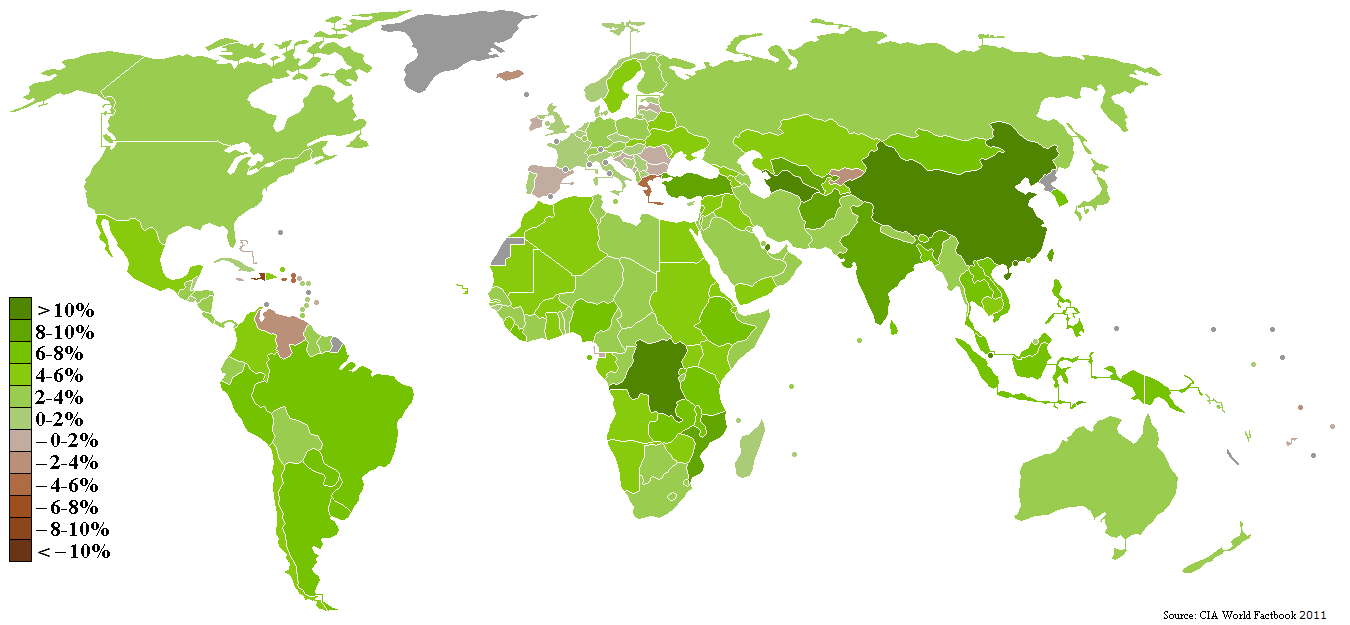
Holding down the growth of the developing world matters. A lot.
Second, globalization encompasses more issues than simple trade. Also included are questions regarding technological implantation, like what standards we should use on the Internet and how to apply child pornography laws. It includes pollution, global financing laws, and weaponization of space as well. Another overlooked issue of globalization? Flows of labor, which presently don't have much of any global regulation whatsoever.
Doha, of course, didn't really address any of these issues. However, what Doha represents is a failure of nations to work together, even when their interests should be, theoretically, mostly aligned (everyone gains from free trade). Such hard-headedness signals bad times for the coming century on the many issues that affect everyone on this planet.
Wednesday, July 30, 2008
Court defends "Exorcism"
This is just too insane to be true
Basic background: A 17 year old girl (now 29) was abducted and subjected to a 2-day exorcism, where she was pinned to the ground and "pummeled."
So, she did what any sensible person would do: take her assaulters to court. Lowers court ruled in favor of the girl and awarded her $188,000 in damages. Big ol' Daddy Texas Supreme Court comes along and overturns the ruling, arguing that this is a First Amendment case...therefore it would be unconstitutional for the court to make a ruling on a religious environment. It's not a blank check, mind you: churches can't sexually abuse children. But the trauma caused by this particular religious experience was not considered within the jurisdiction of the court.
She's taking her case to the US Supreme Court.
I definitely think the Texas Court is in the wrong here. While I respect the rights of religions to hold their own spiritual practices and am willing to grant them some leeway on "child abuse" (for example, a child fussing about having to wake up at 7 AM on a Sunday would not be an adequate excuse for government intervention), this exorcism ritual crossed the line. Physical abuse and forceful pinning for days is an obvious abuse: what 17 year old wouldn't be afraid of being constrained by multiple others for an extended period of time?
And if it's obvious abuse, it isn't permissible under the law, just like sexual abuse.
Basic background: A 17 year old girl (now 29) was abducted and subjected to a 2-day exorcism, where she was pinned to the ground and "pummeled."
So, she did what any sensible person would do: take her assaulters to court. Lowers court ruled in favor of the girl and awarded her $188,000 in damages. Big ol' Daddy Texas Supreme Court comes along and overturns the ruling, arguing that this is a First Amendment case...therefore it would be unconstitutional for the court to make a ruling on a religious environment. It's not a blank check, mind you: churches can't sexually abuse children. But the trauma caused by this particular religious experience was not considered within the jurisdiction of the court.
She's taking her case to the US Supreme Court.
I definitely think the Texas Court is in the wrong here. While I respect the rights of religions to hold their own spiritual practices and am willing to grant them some leeway on "child abuse" (for example, a child fussing about having to wake up at 7 AM on a Sunday would not be an adequate excuse for government intervention), this exorcism ritual crossed the line. Physical abuse and forceful pinning for days is an obvious abuse: what 17 year old wouldn't be afraid of being constrained by multiple others for an extended period of time?
And if it's obvious abuse, it isn't permissible under the law, just like sexual abuse.
Tuesday, July 29, 2008
No, Virginia, High Oil Prices are BAD!
Or at least not anywhere near as good as people are implying.
A lot of talk in the media recently has been about the "good side" of high oil prices. For example, a list that a friend recently sent me in an email includes the following "goods" about high gas prices:
And the most recent Businessweek?
http://www.businessweek.com/magazine/content/08_31/b4094000658012.htm?chan=magazine+channel_top+stories
The basic idea is pretty simple: low oil prices in the past cause all sorts of bad things that we don't like, such as childhood obesity, reliance on foreign oil, outsourcing of jobs, etc. Since oil prices are now high, people can exercise more, cut back on "frivolous consumption," develop alternatives to oil, and develop public transportation networks.
Don't get me wrong. Oil prices in the 1990s were probably too low. Hell, they are probably too low NOW: the price of gasoline still doesn't include the environmental damage it causes. But that's due to the externalities of oil prices...and, like I just said, the externalities still existed. Other than that, everything represented fundamentals.
When it comes to a good with a price determined exclusively by fundamentals and where the private cost is the total cost of the good (IE, a perfectly competitive market with no externalities), more is ALWAYS better. We call those "supply-side shifts." And as any econ 101 student can tell you, supply side shifts mean more goods at lower prices. People don't care so much about being obese, having awesome public transit, or supplying foreign nations with dollars: they are far, far more concerned about having cheap gasoline. They WANT cheap gasoline.
Or, just take a look at those most hurt by the high gasoline prices: the poor. They cannot afford new hybrid cars, they are not located near public transit, and they can't cut back much on their own driving. It's precisely the reason why economists say that energy taxes need to be paired with lump sum rebates especially targeted towards those with low income: people with low income are hurt worse when gas prices rise.
So, what do we really want? We want cheap oil. What would be REALLY awesome if we had cheap oil that didn't negatively affect the environment. And doesn't that make sense? More of good stuff=good.
A lot of talk in the media recently has been about the "good side" of high oil prices. For example, a list that a friend recently sent me in an email includes the following "goods" about high gas prices:
1. Globalized Jobs Return Home
2. Sprawl Stalls - 'Across the country, real estate agents are reporting that many home buyers are looking to move closer to cities. Gas prices are shaping their decisions.' -- Did you not call for an increase in population density at one point?
3. Four-Day Workweeks
4. Less pollution -- heart of the matter
5. More Frugality – 'We're all wasting less.' – Also advocated by WFan.
6. Fewer Traffic Deaths
7. Cheaper Insurance
8. Less Traffic
9. More Cops on the Beat
10. Less Obesity
And the most recent Businessweek?
http://www.businessweek.com/magazine/content/08_31/b4094000658012.htm?chan=magazine+channel_top+stories
The Real Question: Should Oil Be Cheap?
Expensive oil hurts, but there's a business case to be made for a floor under the price of crude
The basic idea is pretty simple: low oil prices in the past cause all sorts of bad things that we don't like, such as childhood obesity, reliance on foreign oil, outsourcing of jobs, etc. Since oil prices are now high, people can exercise more, cut back on "frivolous consumption," develop alternatives to oil, and develop public transportation networks.
Don't get me wrong. Oil prices in the 1990s were probably too low. Hell, they are probably too low NOW: the price of gasoline still doesn't include the environmental damage it causes. But that's due to the externalities of oil prices...and, like I just said, the externalities still existed. Other than that, everything represented fundamentals.
When it comes to a good with a price determined exclusively by fundamentals and where the private cost is the total cost of the good (IE, a perfectly competitive market with no externalities), more is ALWAYS better. We call those "supply-side shifts." And as any econ 101 student can tell you, supply side shifts mean more goods at lower prices. People don't care so much about being obese, having awesome public transit, or supplying foreign nations with dollars: they are far, far more concerned about having cheap gasoline. They WANT cheap gasoline.
Or, just take a look at those most hurt by the high gasoline prices: the poor. They cannot afford new hybrid cars, they are not located near public transit, and they can't cut back much on their own driving. It's precisely the reason why economists say that energy taxes need to be paired with lump sum rebates especially targeted towards those with low income: people with low income are hurt worse when gas prices rise.
So, what do we really want? We want cheap oil. What would be REALLY awesome if we had cheap oil that didn't negatively affect the environment. And doesn't that make sense? More of good stuff=good.
Monday, July 28, 2008
So, ARE boys better than girls at math?
Sometimes, I really don't have to write a thing!
The answer: that's not the question you should be asking.
Rather, you should be asking how the skill level of boys and girls varies by person. If there is a difference in variance, then it means one group will be producing more geniuses (and idiots) than the other. Since certain jobs require a LOT of intelligence, it means that one gender will be over-represented in that field.
Thursday, July 24, 2008
Career Education in the United States
Full Report Here
Here's an interesting bit: we know that more women than men are going to college these days.
Did you know they also are more likely to get additional education when out in the work force?
Here's an interesting bit: we know that more women than men are going to college these days.
Did you know they also are more likely to get additional education when out in the work force?
Higher rates of participation in work-related coursetaking were also observed for (female) than for male adult labor force members in 2004–05 (44 vs. 31 percent)
Scariest sentence this morning
The White House, citing an urgent need to restore market confidence in the two mortgage giants, Fannie Mae and Freddie Mac, said President Bush would sign the measure despite his opposition to the inclusion of nearly $4 billion in grants for local governments to buy and refurbish foreclosed properties.
Why in the world could you oppose that?
Taken from the NY Times article on the Housing Bill
Subscribe to:
Posts (Atom)
